
Newborn Screening Awareness Social Media Toolkit
This social media toolkit was created to help State Zebra Network members easily share accurate, meaningful, and human-centered newborn screening awareness messages across social media. Whether you’re posting once or planning a full campaign, these resources are designed to be flexible, accessible, and ready to use.
What’s Included
This toolkit includes:
Downloadable NBS awareness graphics in Facebook and Instagram sizes
Platform-specific caption options for Facebook, Instagram, and Twitter/X
Suggested hashtag sets you can customize for your audience
A simple posting guide to help you share with confidence
All messaging is grounded in rare disease research, policy history, and patient experience.
How to Use This Toolkit
You don’t need to use everything.
Choose the graphics and captions that align with your organization’s voice, audience, and goals. Captions can be posted as-is or lightly edited, and graphics may be shared at any time—during NBS Awareness Month or throughout the year.
Social Media Graphics
You have the option to either download the full graphic pack (.zip format) or browse the gallery below to download individual graphics. Click on the thumbnail image to see the full graphic.
Social Media Copy Options
For each graphic, members can choose from 2–3 message options per platform. Copy is adaptable across Facebook, Instagram, and Twitter/X.
Tone guidance:
- Facebook & Instagram: warm, accessible, community-focused
- Twitter/X: concise, punchy, awareness-driven
Members may adapt hashtags, tag partners, and personalize posts while keeping core messaging intact.
Suggested Hashtag Sets (Use 3–6 per post)
*(Hashtags are optional and may be customized based on audience or campaign goals.)
- Core: #NewbornScreening #NewbornScreeningAwarenessMonth #RareDisease #StateZebraNetwork
- Advocacy / policy: #RareDiseaseAdvocacy #HealthPolicy #HealthEquity #RUSP
- Campaign / exhibit: #BeyondTheDiagnosis #RareOnTheRoad
- Topic-specific: #HearingScreening #CCHD #EarlyDetection #HomeBirth #BirthCenter
Tip: For Facebook and Instagram, use the core set plus 1-3 topic-specific hashtags. For X, use 2-4 of the most relevant hashtags to preserve space.
Newborn Screening Awareness Month
FACEBOOK / INSTAGRAM
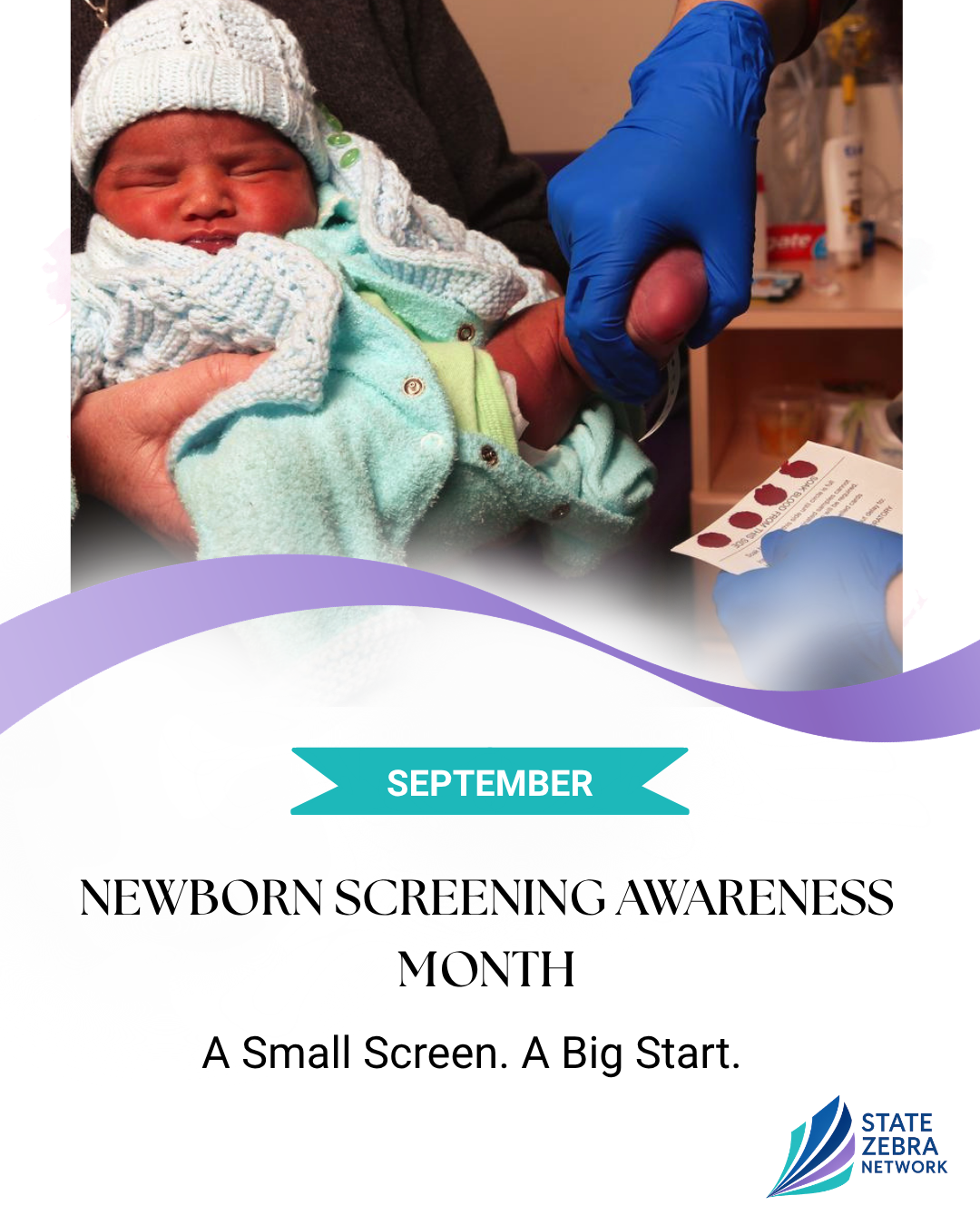
September is Newborn Screening Awareness Month. A few drops of blood, a quick hearing check, and a simple pulse oximetry screen can help identify serious health conditions before symptoms appear. Early screening can mean earlier answers, earlier treatment, and a healthier start. This month, we’ll share what newborn screening is, why it matters, and how families and advocates can learn more about the program in their own state.
X / TWITTER: September is #NewbornScreeningAwarenessMonth. A small screen can
make a big difference by helping identify serious conditions early, when treatment may have the greatest impact. #NewbornScreening #RareDisease #StateZebraNetwork
HASHTAGS: #NewbornScreening #NewbornScreeningAwarenessMonth
#RareDisease #StateZebraNetwork
MEMBER NOTE: Optional customization: Add your coalition name or
state-specific NBS link.
Know Your State
FACEBOOK / INSTAGRAM
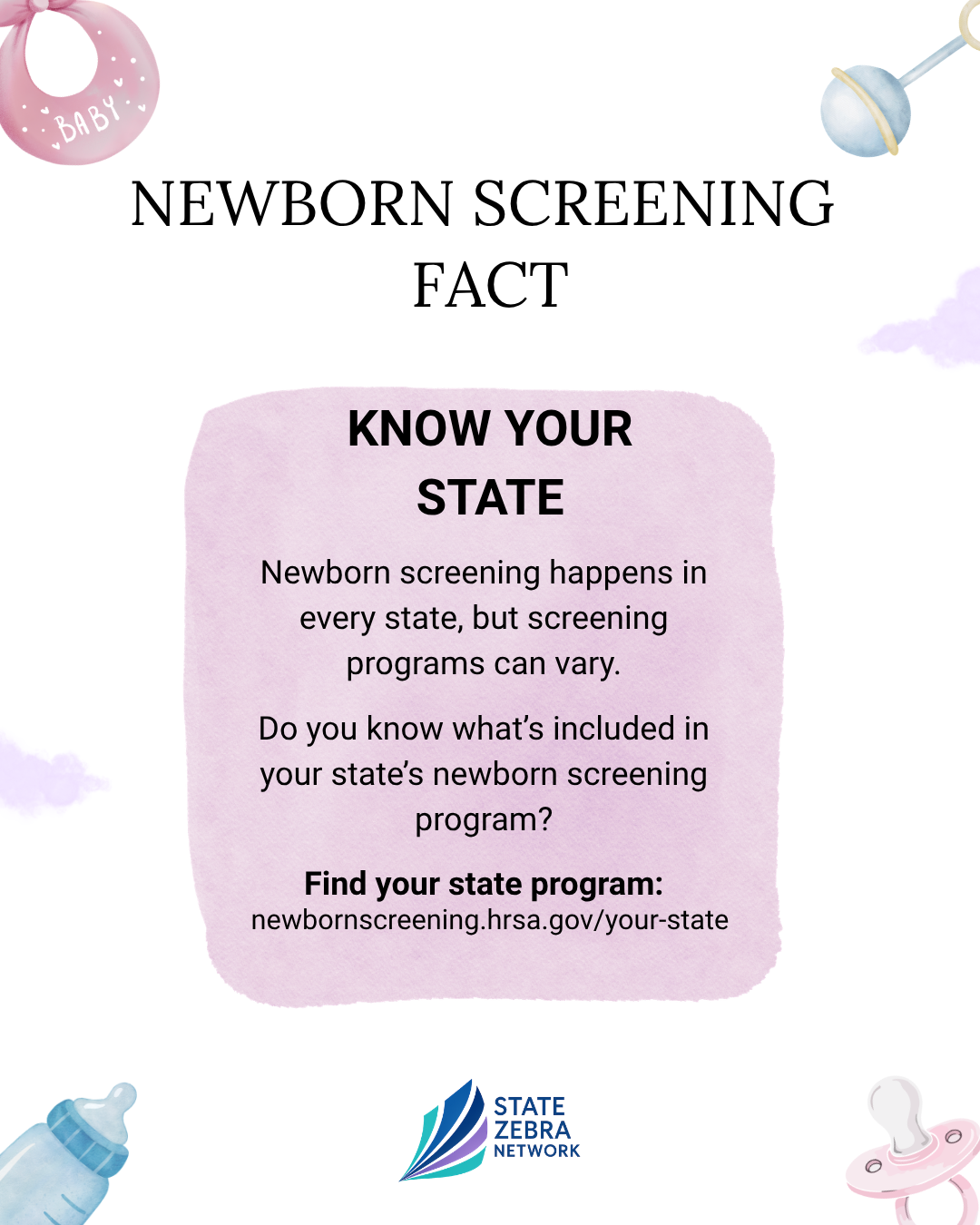
Newborn screening happens in every state, but state programs can vary. The conditions screened, timing, follow-up processes, and program requirements may differ. Families and advocates should know what is included where they live. Find your state program at newbornscreening.hrsa.gov/your-state.
X / TWITTER: Newborn screening happens nationwide, but programs vary by state.
Know what is included where you live: newbornscreening.hrsa.gov/your-state #NewbornScreening #StateZebraNetwork
HASHTAGS: #NewbornScreening #NewbornScreeningAwarenessMonth
#RareDisease #StateZebraNetwork
MEMBER NOTE: Strong customization opportunity: Add your state’s
direct NBS program link.
How Many Conditions Does Your State Screen For?
FACEBOOK / INSTAGRAM
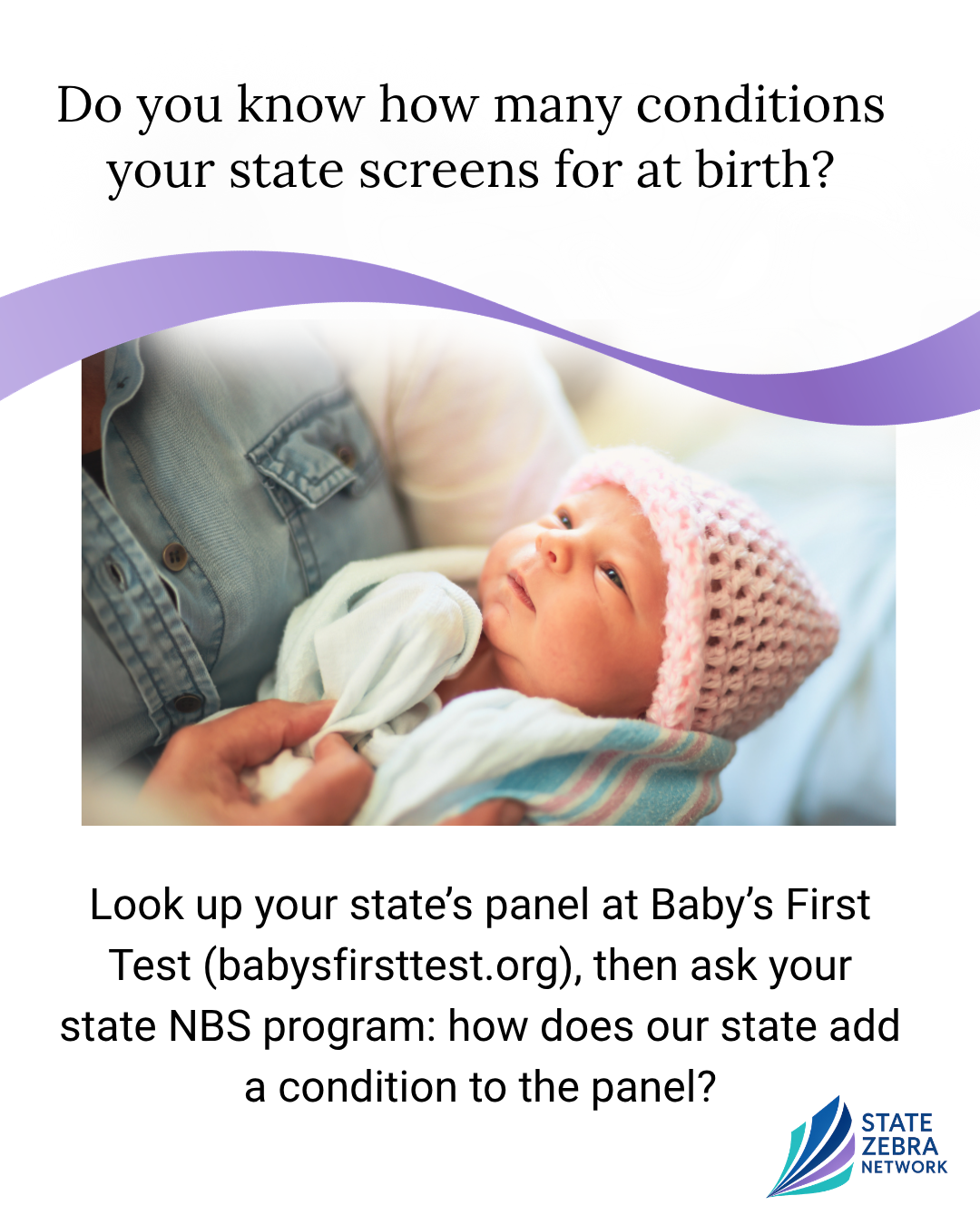
Every baby in the U.S. gets a newborn screen, but the conditions on that panel depend on where the baby is born. The national Recommended Uniform Screening Panel (RUSP) includes 40 core conditions: serious, treatable diseases that can be detected from a few drops of blood in the first days of life. Some states screen for nearly all of them. Others screen for only some, and a few add conditions of their own.
That means two babies born a few miles apart, across a state line, could be screened for different diseases.
Where a baby is born should not decide whether a rare, treatable condition is caught in time. This Newborn Screening Awareness Month, find out what is on your state’s panel, and if a condition is missing, that is an advocacy moment.
CTA: Look up your state’s panel at Baby’s First Test (babysfirsttest.org), then ask your state NBS program: how does our state add a condition to the panel?
X / TWITTER: Do you know how many conditions your state screens for? Panels
vary by state. Compare yours with the national RUSP, then ask how conditions get added. babysfirsttest.org #NewbornScreening #RUSP #RareDisease
HASHTAGS: #NewbornScreening #NewbornScreeningAwarenessMonth
#RareDisease #StateZebraNetwork #RUSP #HealthEquity
MEMBER NOTE: Research context: Building on years of newborn
screening data collected by Patient Advocacy Strategies, Patient Advocacy Strategies and RareRising are partnering on an in-depth review of newborn screening programs across all 50 states and D.C. Source: Newborn screening state research by Patient Advocacy Strategies and RareRising.
Source: Newborn screening state research by Patient Advocacy Strategies and RareRising.
Meet the Blood Spot Screen
FACEBOOK / INSTAGRAM
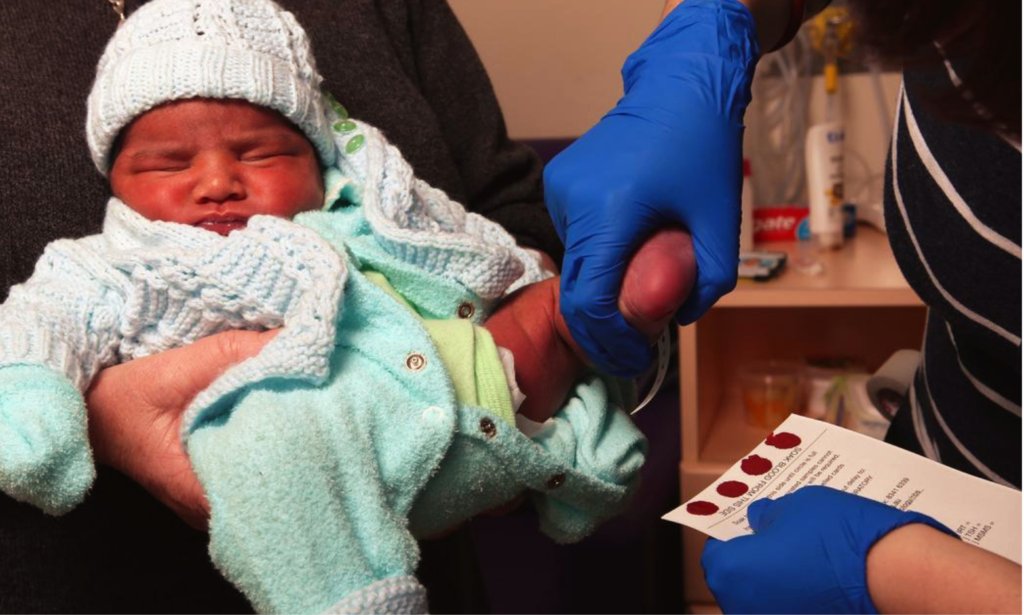
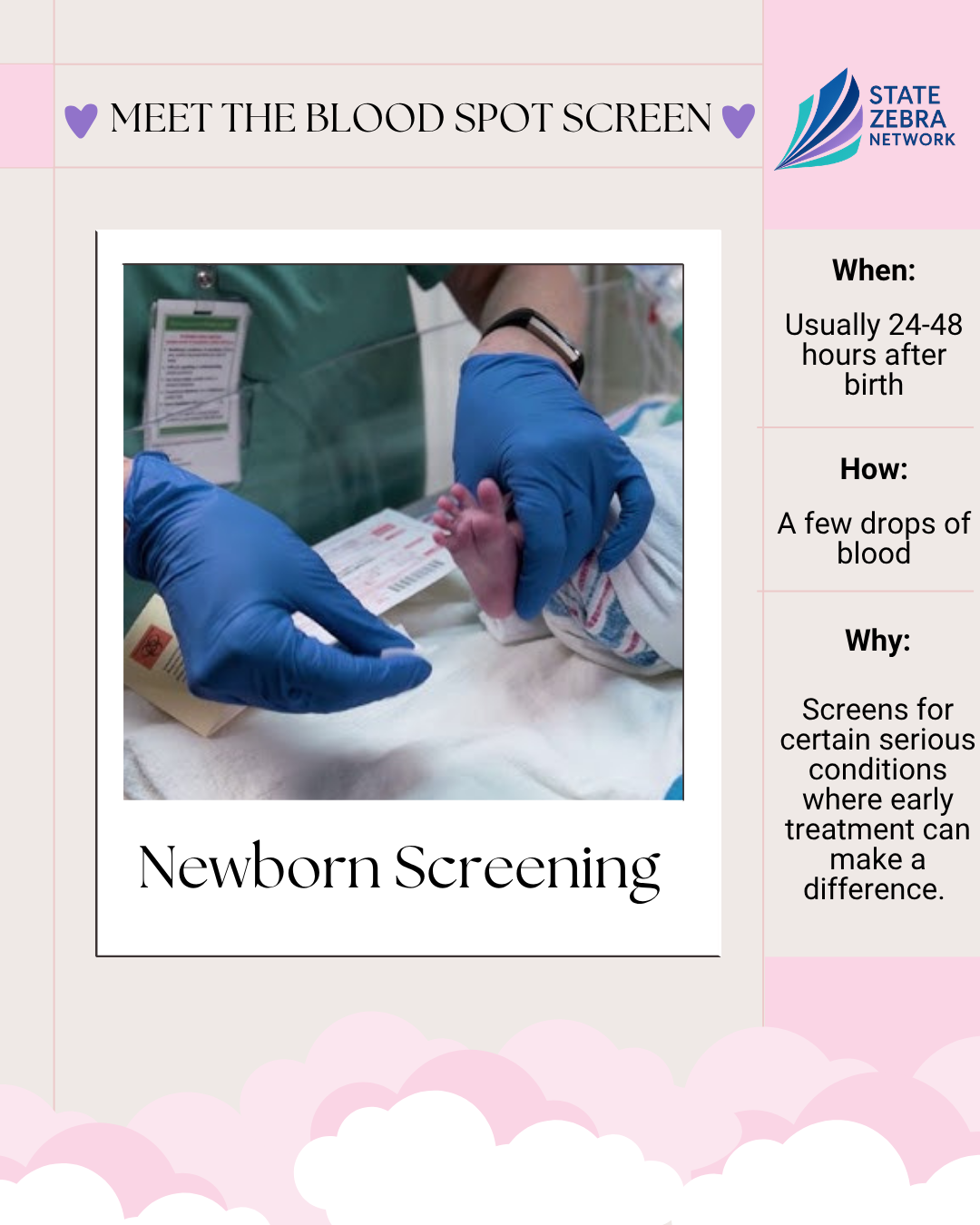
You may know it as the heel prick. Usually within the first 24–48 hours after birth, a few drops of blood are collected from a baby’s heel and placed on a special card. The sample is screened for certain serious conditions where early identification and treatment can make a meaningful difference. The exact timing and conditions screened can vary by state.
X / TWITTER: Meet the blood spot screen: a few drops of blood, usually
collected 24–48 hours after birth, can screen for serious conditions where early treatment matters. #NewbornScreening #RareDisease
HASHTAGS: #NewbornScreening #NewbornScreeningAwarenessMonth
#RareDisease #StateZebraNetwork
MEMBER NOTE: Optional customization: Link to your state’s
newborn screening program.
Newborn Screening Questions to Ask
FACEBOOK / INSTAGRAM
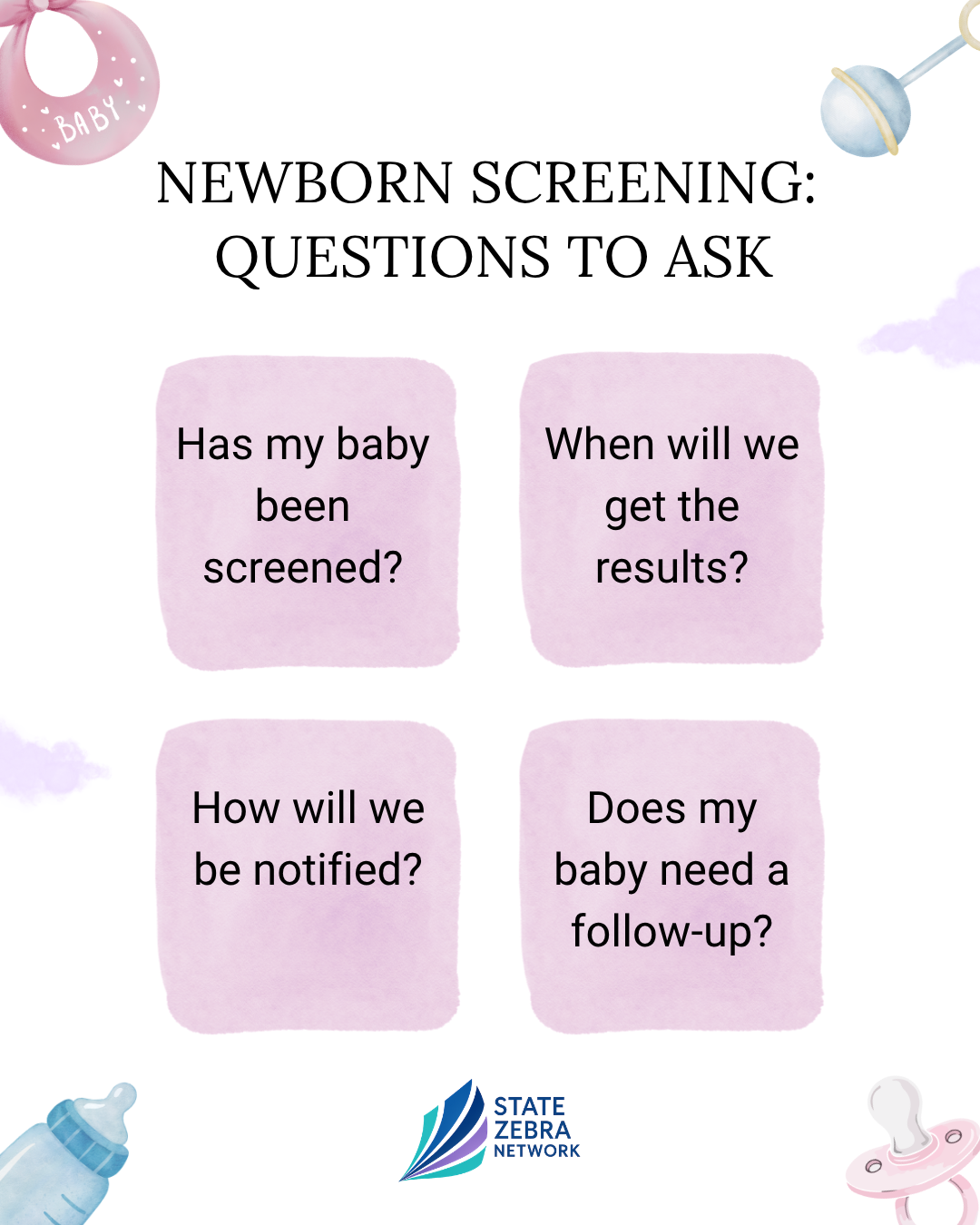
Newborn screening can feel like one more thing happening during a very busy first few days. It is okay to ask questions. Has my baby been screened? When will we get the results? How will we be notified? Does my baby need follow-up? Save these questions and share them with an expecting parent.
X / TWITTER: New parent? Ask: Has my baby been screened? When will we get
results? How will we be notified? Is follow-up needed? Save this for later. #NewbornScreening #NBSMonth
HASHTAGS: #NewbornScreening #NewbornScreeningAwarenessMonth
#RareDisease #StateZebraNetwork
MEMBER NOTE: No customization needed.
A Baby Can Look Perfectly Healthy
FACEBOOK / INSTAGRAM
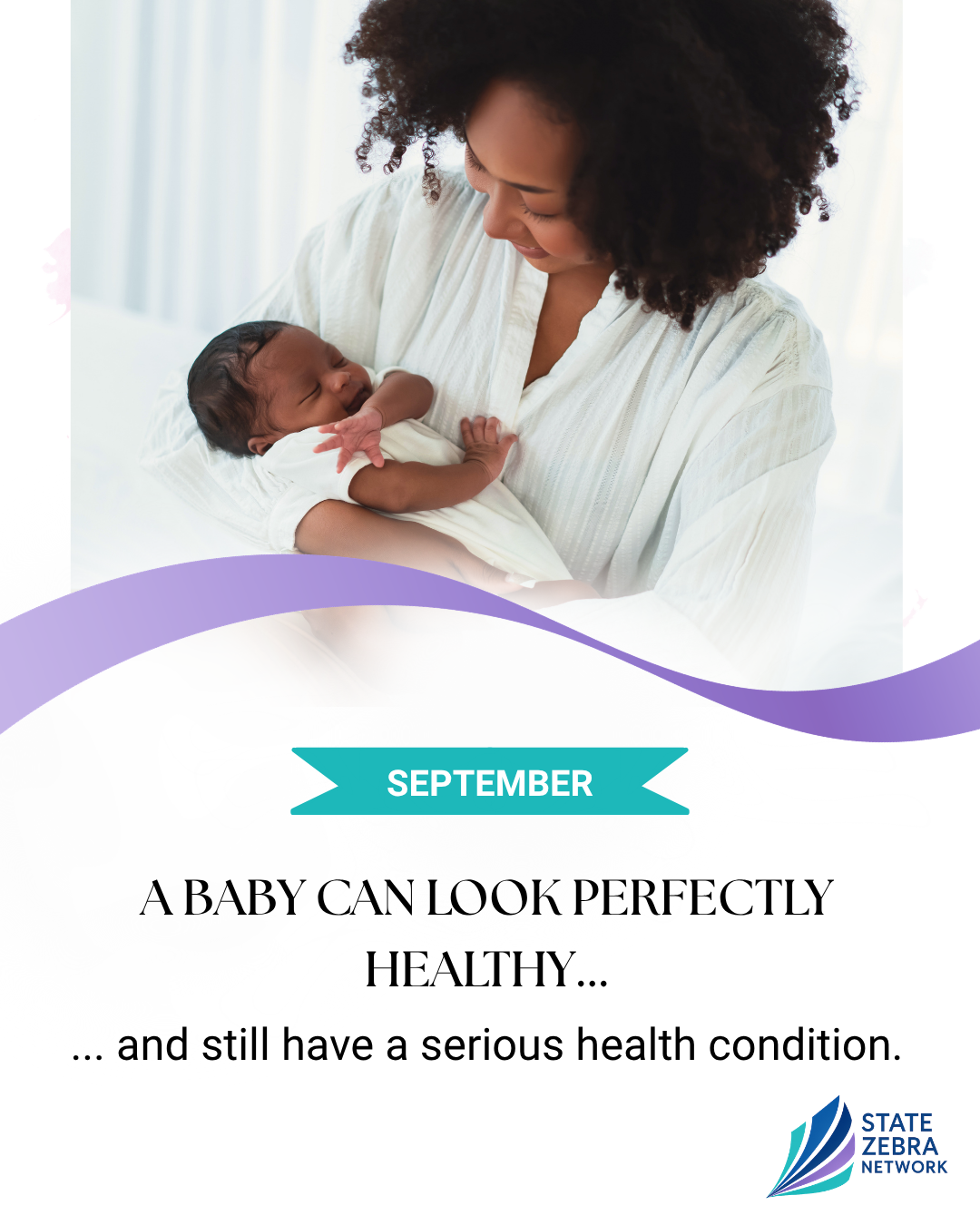
Many conditions found through newborn screening are invisible at birth. A baby may eat, sleep, and look completely healthy while a serious condition is already affecting the body. Screening gives families information they cannot get just by looking at their newborn.
X / TWITTER: Healthy-looking does not always mean there is nothing happening
underneath. Newborn screening helps find serious conditions before symptoms appear. #NewbornScreening #RareDisease
HASHTAGS: #NewbornScreening #NewbornScreeningAwarenessMonth
#RareDisease #StateZebraNetwork
MEMBER NOTE: No customization needed.
Newborn Screening Happens in Steps
FACEBOOK / INSTAGRAM
Newborn screening is more than one test. Most babies receive a blood spot screen, a hearing screen, and a heart screen using pulse oximetry. Together, these screenings look for different kinds of conditions that may not be obvious at birth. Over the next few posts, we’ll break down each one.
X / TWITTER: Newborn screening is more than one test. Blood spot, hearing, and
heart screening work together to help identify conditions that may not be obvious at birth. #NewbornScreening #NBSMonth
HASHTAGS: #NewbornScreening #NewbornScreeningAwarenessMonth
#RareDisease #StateZebraNetwork
MEMBER NOTE: No customization needed.
Transparency Matters
FACEBOOK / INSTAGRAM
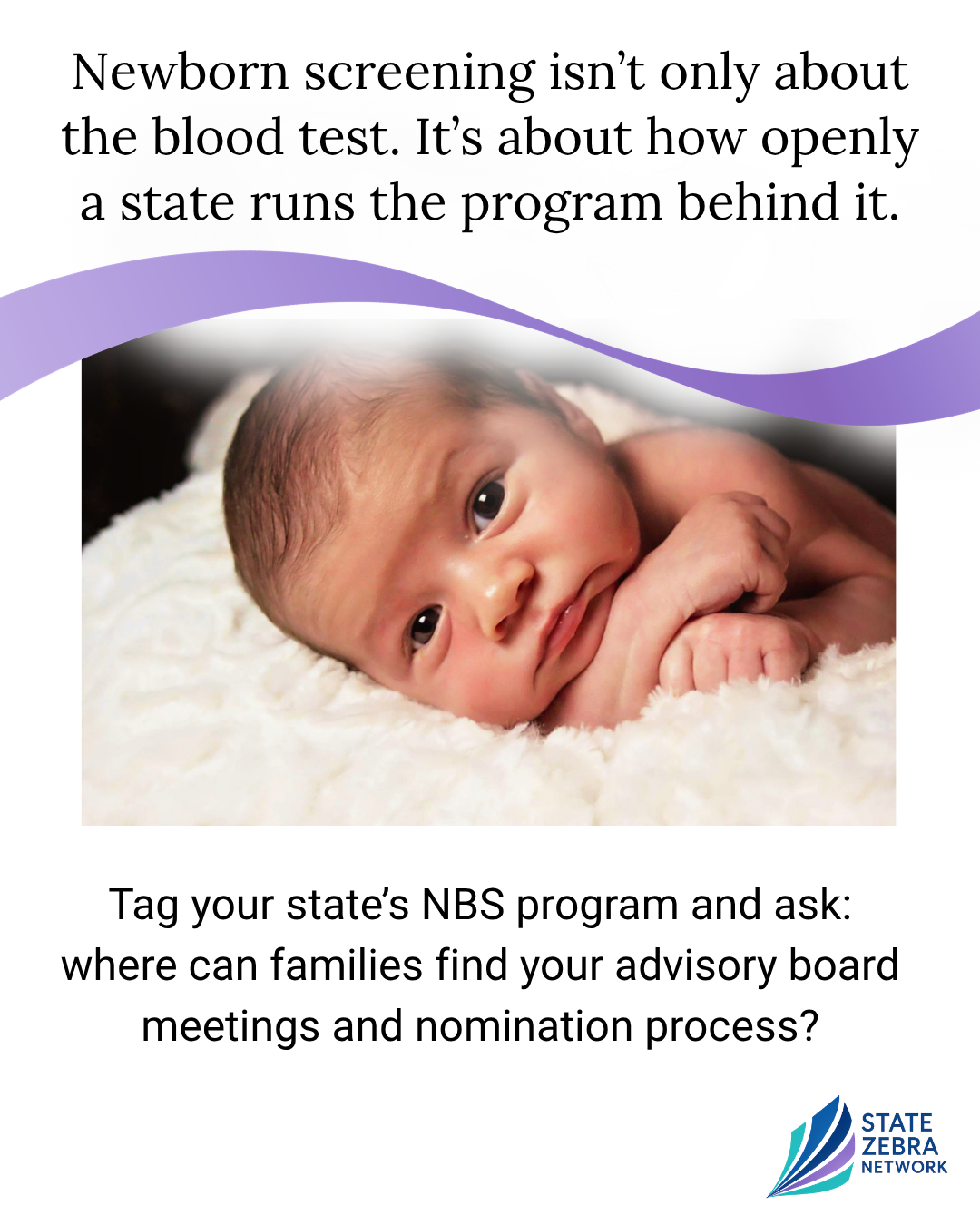
Newborn screening is not only about the blood test. It is also about how openly a state runs the program behind it.
Building on years of newborn screening data collected by Patient Advocacy Strategies, Patient Advocacy Strategies and RareRising are partnering on an in-depth review of newborn screening programs across all 50 states and D.C. The research has found significant gaps in how easily families and advocates can access information about their state’s program.
Only about 1 in 3 states post advisory committee meeting minutes or recordings. Only about 1 in 3 publish an annual report on screening. And only about 1 in 4 publicly explain how to nominate a new condition for the panel.
When families, clinicians, and advocates can see how decisions are made, they can support the process and push for improvements where gaps exist. You cannot advocate for what you cannot find.
CTA: Tag your state’s NBS program and ask: where can families find your advisory board meetings and nomination process?
X / TWITTER: Transparency matters in newborn screening. Can families find your
state’s advisory meetings, annual reports, and nomination process? If not, that is an advocacy opportunity. #NewbornScreening #RareDiseaseAdvocacy
HASHTAGS: #NewbornScreening #NewbornScreeningAwarenessMonth
#RareDisease #StateZebraNetwork #RareDiseaseAdvocacy #HealthPolicy
MEMBER NOTE: Source: Newborn screening state research by Patient
Advocacy Strategies and RareRising.
Source: Newborn screening state research by Patient Advocacy Strategies and RareRising.
Meet the Hearing Screen
FACEBOOK / INSTAGRAM
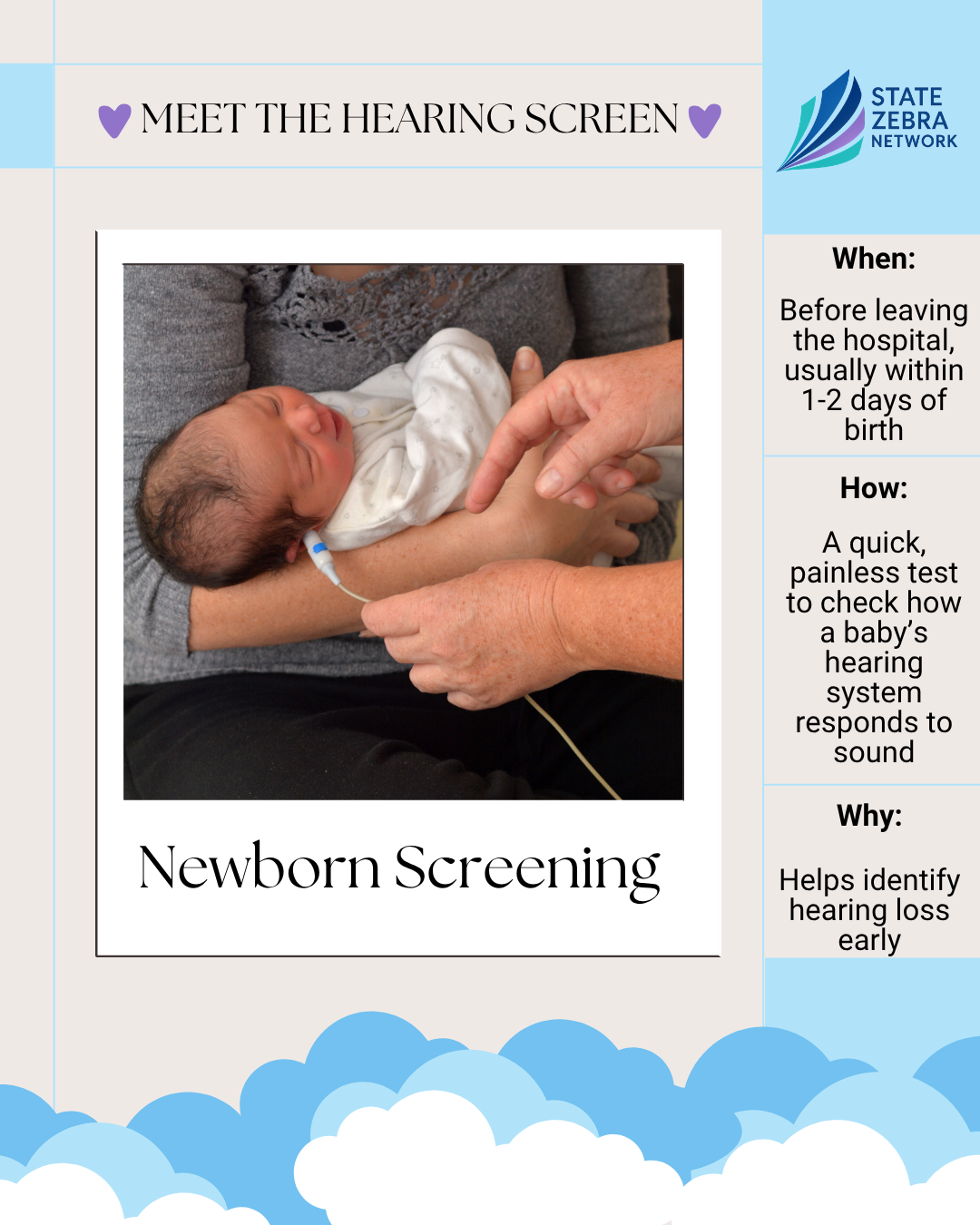
Before leaving the hospital, most newborns receive a quick, painless hearing screen. It checks how a baby’s hearing system responds to sound and can identify possible hearing loss early. Early identification gives families more time to connect with the services and support their baby may need.
X / TWITTER: A newborn hearing screen is quick and painless and can help
identify hearing loss early. Early answers mean earlier access to support. #NewbornScreening #HearingScreening
HASHTAGS: #NewbornScreening #NewbornScreeningAwarenessMonth
#RareDisease #StateZebraNetwork
MEMBER NOTE: No customization needed.
Beyond the Diagnosis: Rare on the Road
FACEBOOK / INSTAGRAM
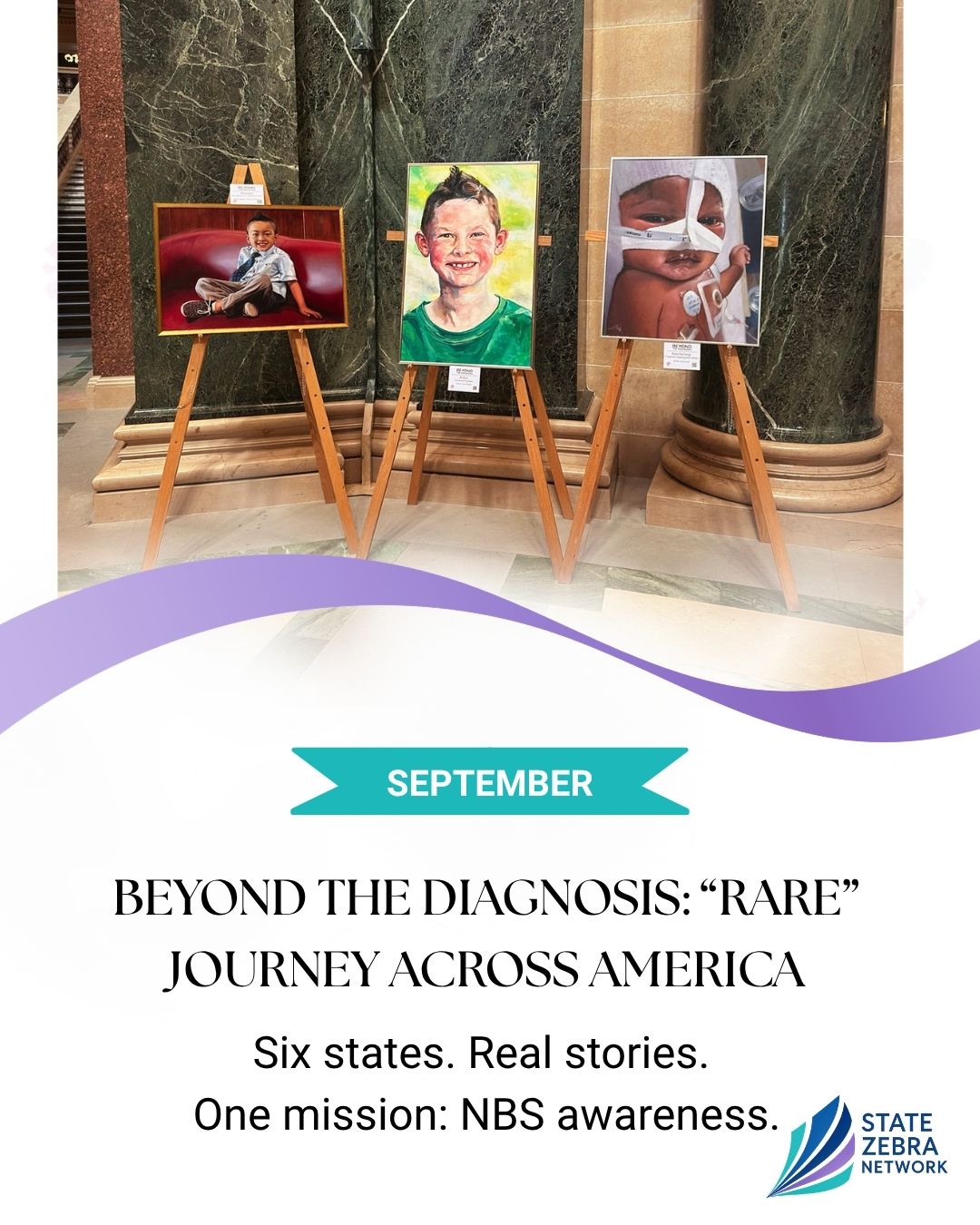
Rare disease stories are more than diagnoses. This September, State Zebra Network coalitions are partnering with Beyond the Diagnosis to bring rare disease stories into public spaces and connect them with newborn screening awareness. Six states. Real stories. One mission: helping more people understand why early answers matter. Watch for the exhibits and stories we will be sharing throughout the month.
X / TWITTER: Six states. Real stories. One mission: newborn screening
awareness. This September, rare disease stories are going on the road with Beyond the Diagnosis and State Zebra Network coalitions. #BeyondTheDiagnosis #NewbornScreening #RareDisease
HASHTAGS: #NewbornScreening #NewbornScreeningAwarenessMonth
#RareDisease #StateZebraNetwork #BeyondTheDiagnosis #RareJourney
MEMBER NOTE: Customize this post with your coalition’s exhibit
location, dates, participating families, and local tags.
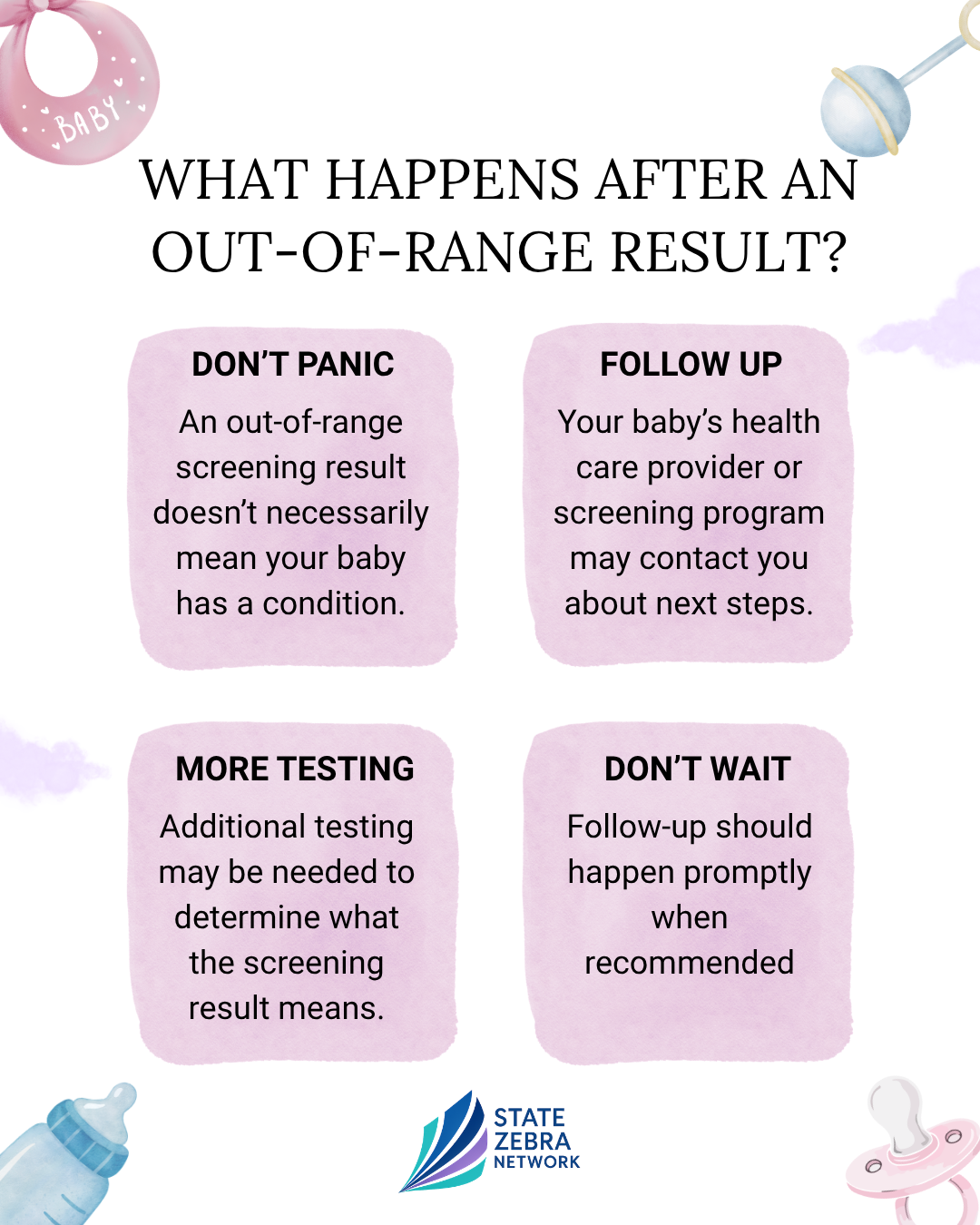
What Happens After an Out-of-Range Result?
FACEBOOK / INSTAGRAM
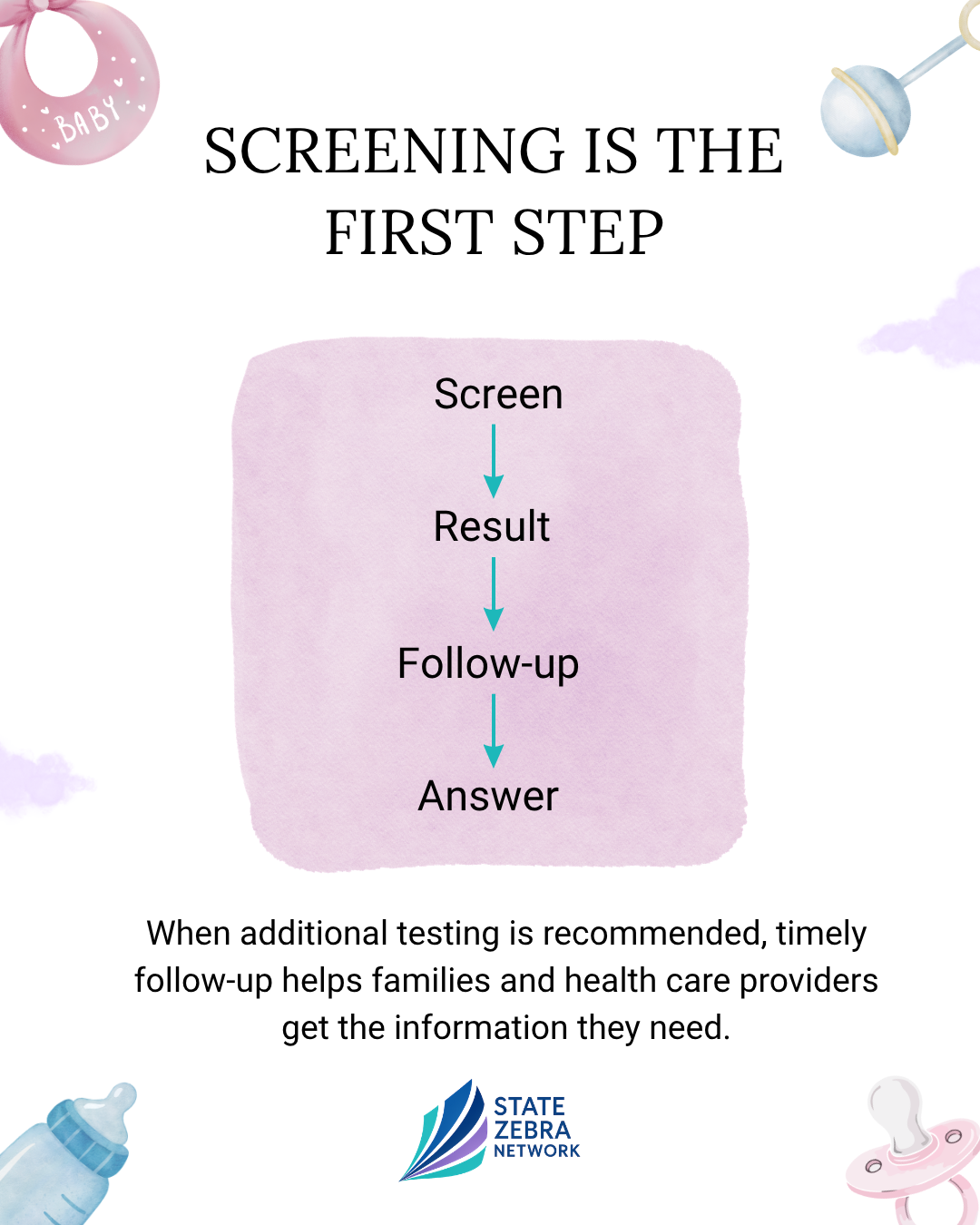
If a newborn screening result is out of range, don’t panic, but do follow up. Your baby’s health care provider or screening program may contact you about repeat screening or additional testing. An out-of-range result does not necessarily mean your baby has a condition, but recommended follow-up should happen promptly. Save this graphic so you know what to expect.
X / TWITTER: Out-of-range newborn screen? Don’t panic, but don’t delay
recommended follow-up. More testing may be needed to understand what the result means. #NewbornScreening #NBSMonth
HASHTAGS: #NewbornScreening #NewbornScreeningAwarenessMonth
#RareDisease #StateZebraNetwork
MEMBER NOTE: No customization needed.
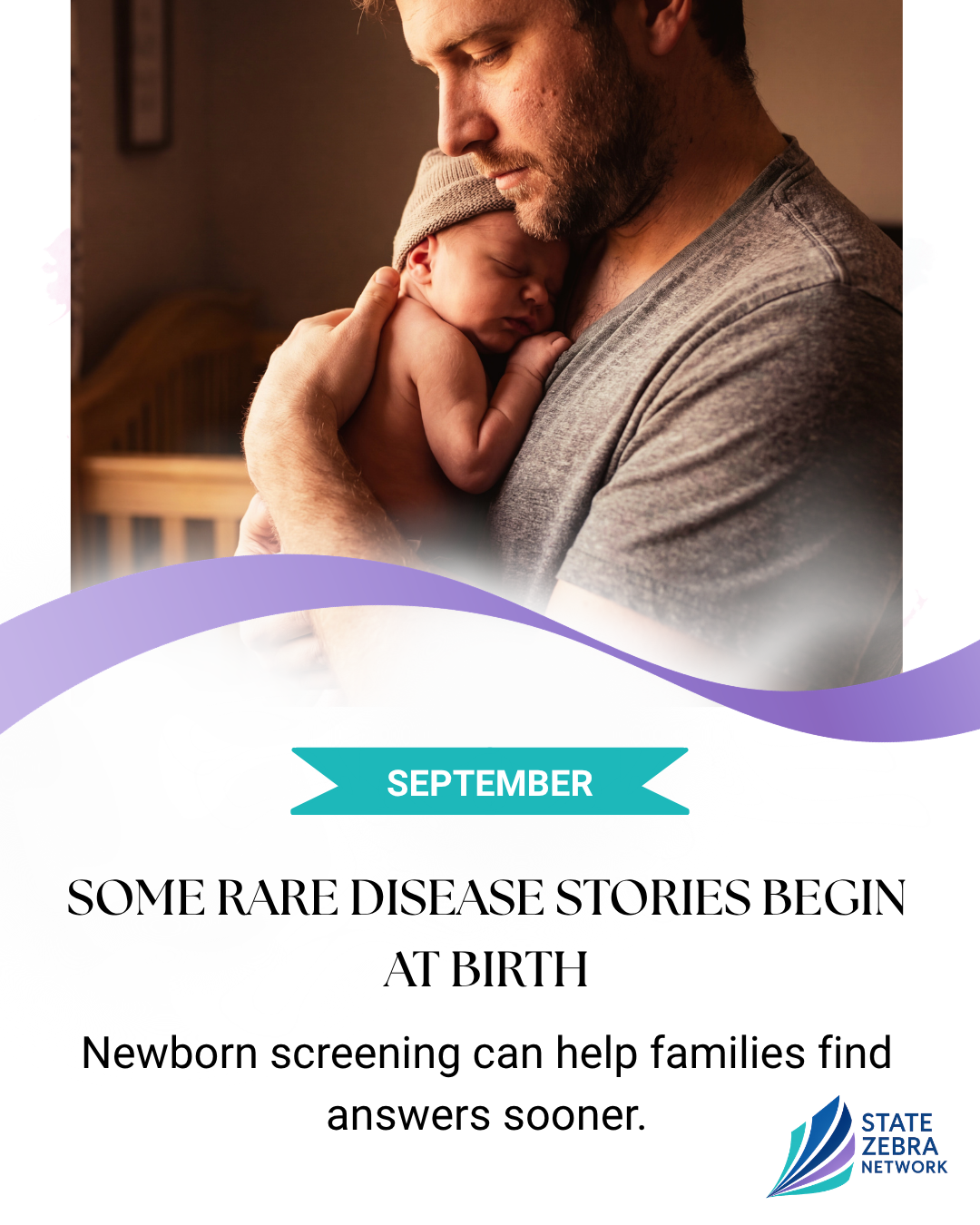
Some Rare Disease Stories Begin at Birth
FACEBOOK / INSTAGRAM
Some rare disease stories begin at birth. Newborn screening helps identify certain serious conditions before a baby looks sick, giving families and care teams the chance to act sooner. Not every rare disease can be found through newborn screening, but for the conditions that can, early detection can change the course of a child’s life.
X / TWITTER: Some rare disease stories begin at birth. Newborn screening can
help families find answers sooner, before symptoms appear. #NewbornScreening #RareDisease #StateZebraNetwork
HASHTAGS: #NewbornScreening #NewbornScreeningAwarenessMonth
#RareDisease #StateZebraNetwork
MEMBER NOTE: Optional customization: Add a family story or local
resource.
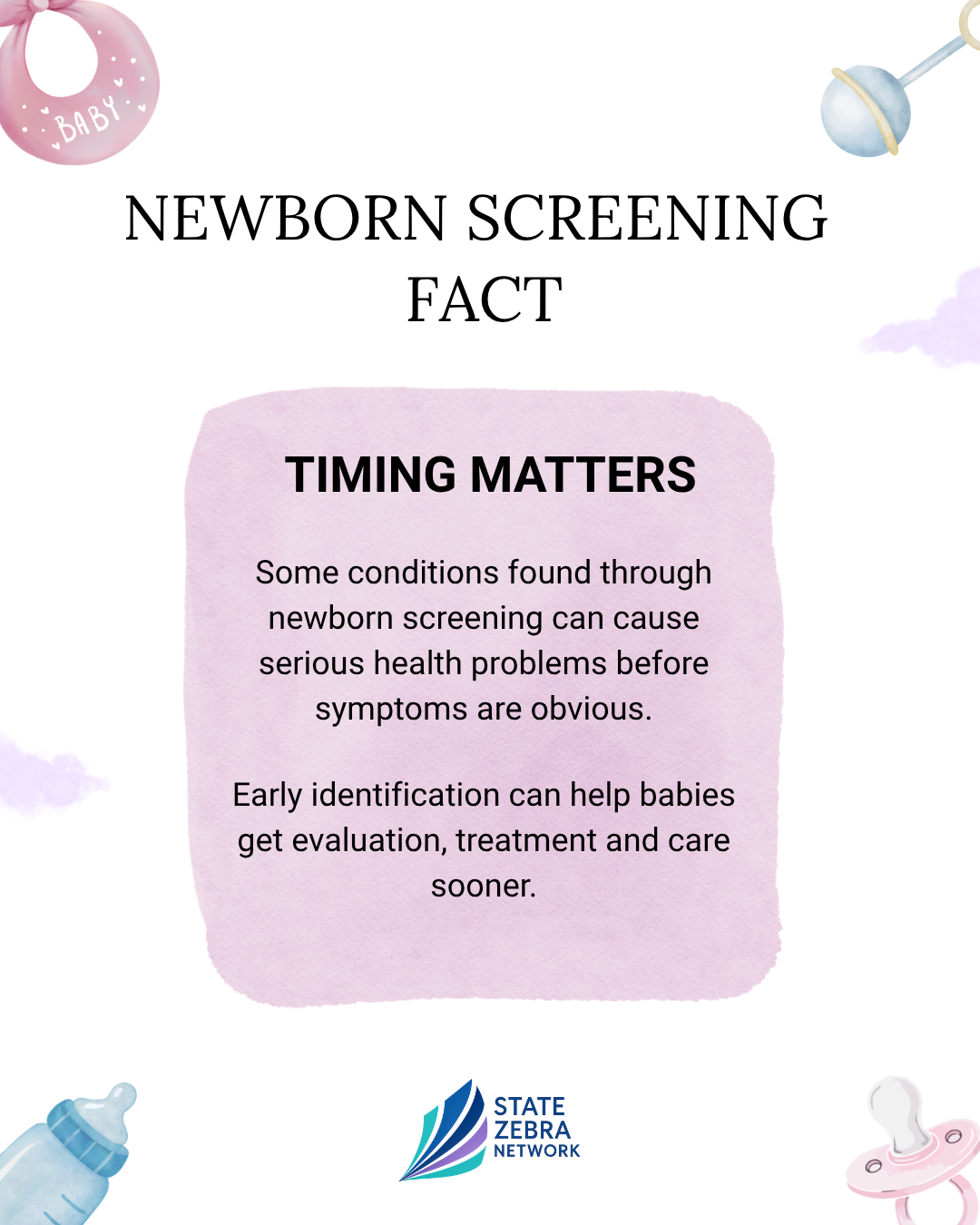
Timing Matters
FACEBOOK / INSTAGRAM
Newborn screening happens early for a reason. Some of the conditions included on newborn screening panels can cause serious harm before symptoms are obvious. Screening in the first days of life gives care teams the chance to identify a concern and begin follow-up quickly.
X / TWITTER: Why screen so soon? Because some serious conditions can cause
harm before symptoms appear. Early screening creates an opportunity for early action. #NewbornScreening #RareDisease
HASHTAGS: #NewbornScreening #NewbornScreeningAwarenessMonth
#RareDisease #StateZebraNetwork
MEMBER NOTE: No customization needed.
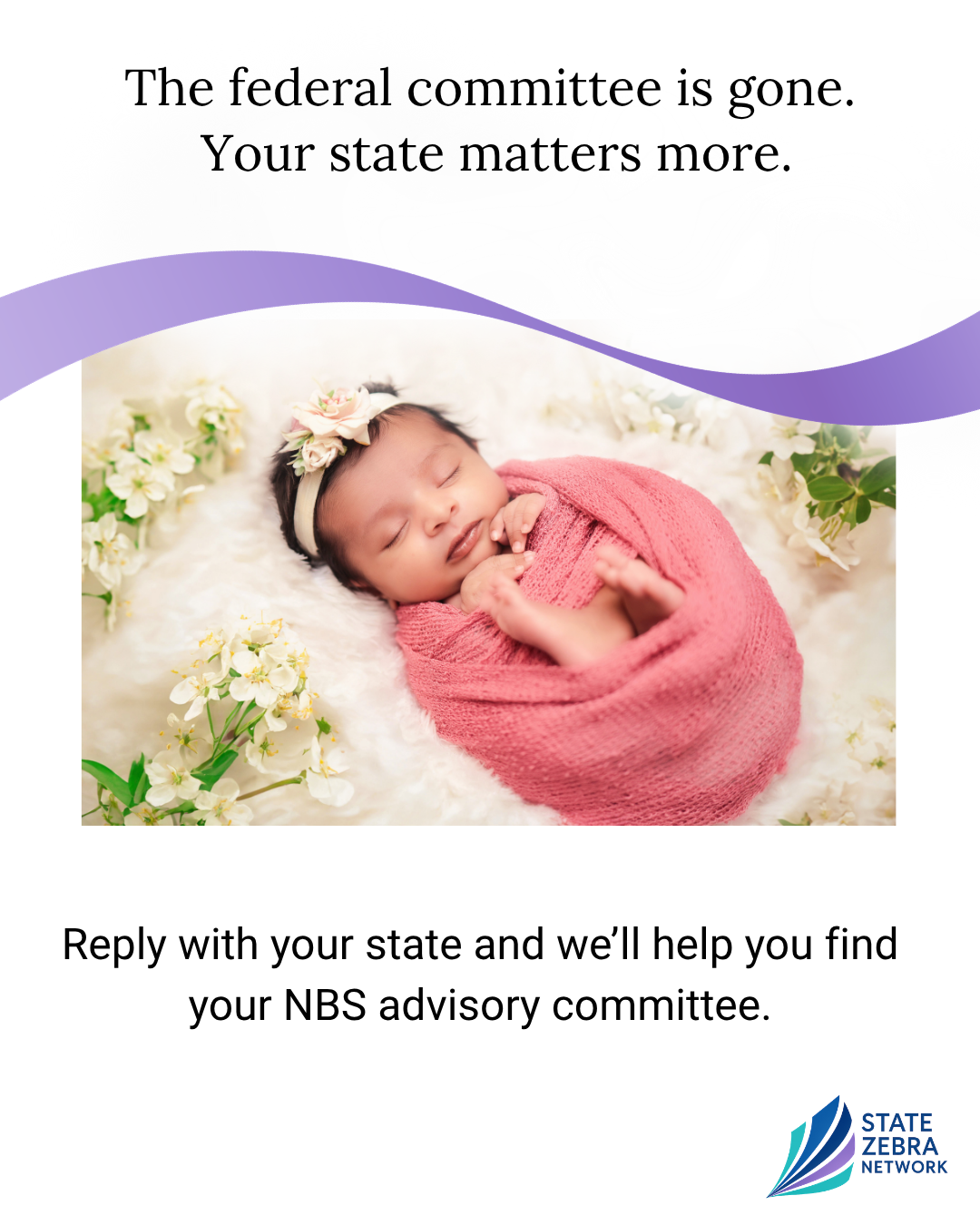
The Federal Committee Is Gone – Your State Matters More
FACEBOOK / INSTAGRAM
For more than 20 years, a federal committee, the ACHDNC, reviewed which new conditions should be added to the national screening panel. In 2025, that committee was dissolved.
That means the path to getting a new condition screened is shifting to the states until further notice. Your state’s newborn screening advisory board has never mattered more: which conditions it reviews, how often it meets, and whether families can take part all shape what babies in your state are screened for.
A new volunteer group, the Newborn Screening Collaborative, is working to keep evidence-based reviews going nationally. But state-by-state engagement is where the difference gets made.
This Newborn Screening Awareness Month, find your state’s NBS advisory board. Ask when it meets and whether the public can attend. Your voice belongs in that room.
CTA: Reply with your state and we’ll help you find your NBS advisory committee.
X / TWITTER: Newborn screening is a state-level issue. With the federal ACHDNC
dissolved in 2025, state advisory boards and public engagement matter more than ever. Find yours and ask how families can participate. #NewbornScreening #HealthPolicy
HASHTAGS: #NewbornScreening #NewbornScreeningAwarenessMonth
#RareDisease #StateZebraNetwork #HealthPolicy #RareDiseaseAdvocacy
MEMBER NOTE: Research context: Building on years of newborn
screening data collected by Patient Advocacy Strategies, Patient Advocacy Strategies and RareRising are partnering on an in-depth review of newborn screening programs across all 50 states and D.C.
Source: Newborn screening state research by Patient Advocacy Strategies and RareRising.
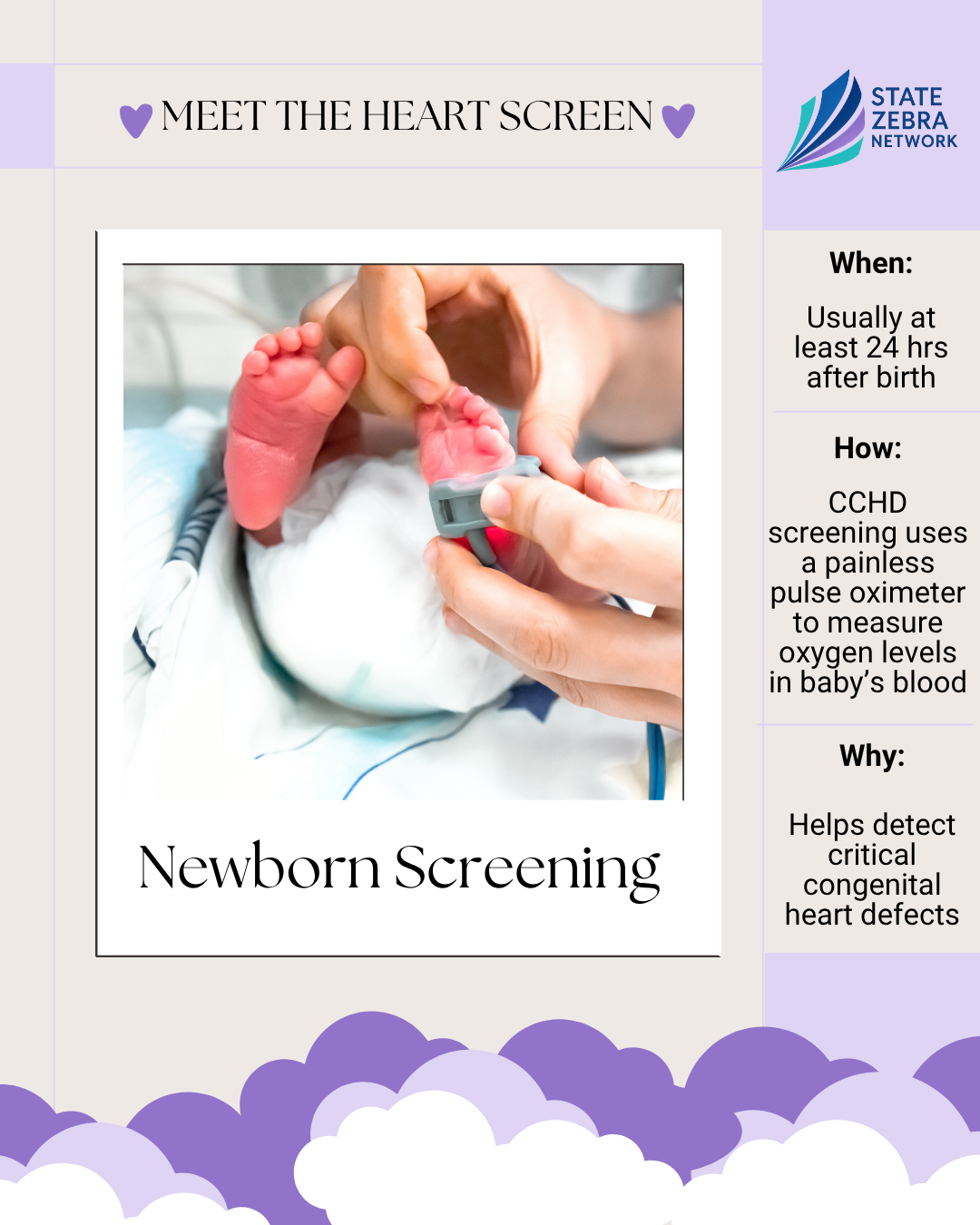
Meet the Heart Screen
FACEBOOK / INSTAGRAM
A tiny sensor can provide important information. Pulse oximetry measures oxygen levels in a baby’s blood and is usually performed after a baby is at least 24 hours old. It can help detect critical congenital heart defects that may not otherwise be obvious before a newborn leaves the hospital.
X / TWITTER: A tiny sensor can help detect critical congenital heart defects
before symptoms are obvious. That’s the newborn heart screen. #NewbornScreening #CCHD #StateZebraNetwork
HASHTAGS: #NewbornScreening #NewbornScreeningAwarenessMonth
#RareDisease #StateZebraNetwork
MEMBER NOTE: No customization needed.
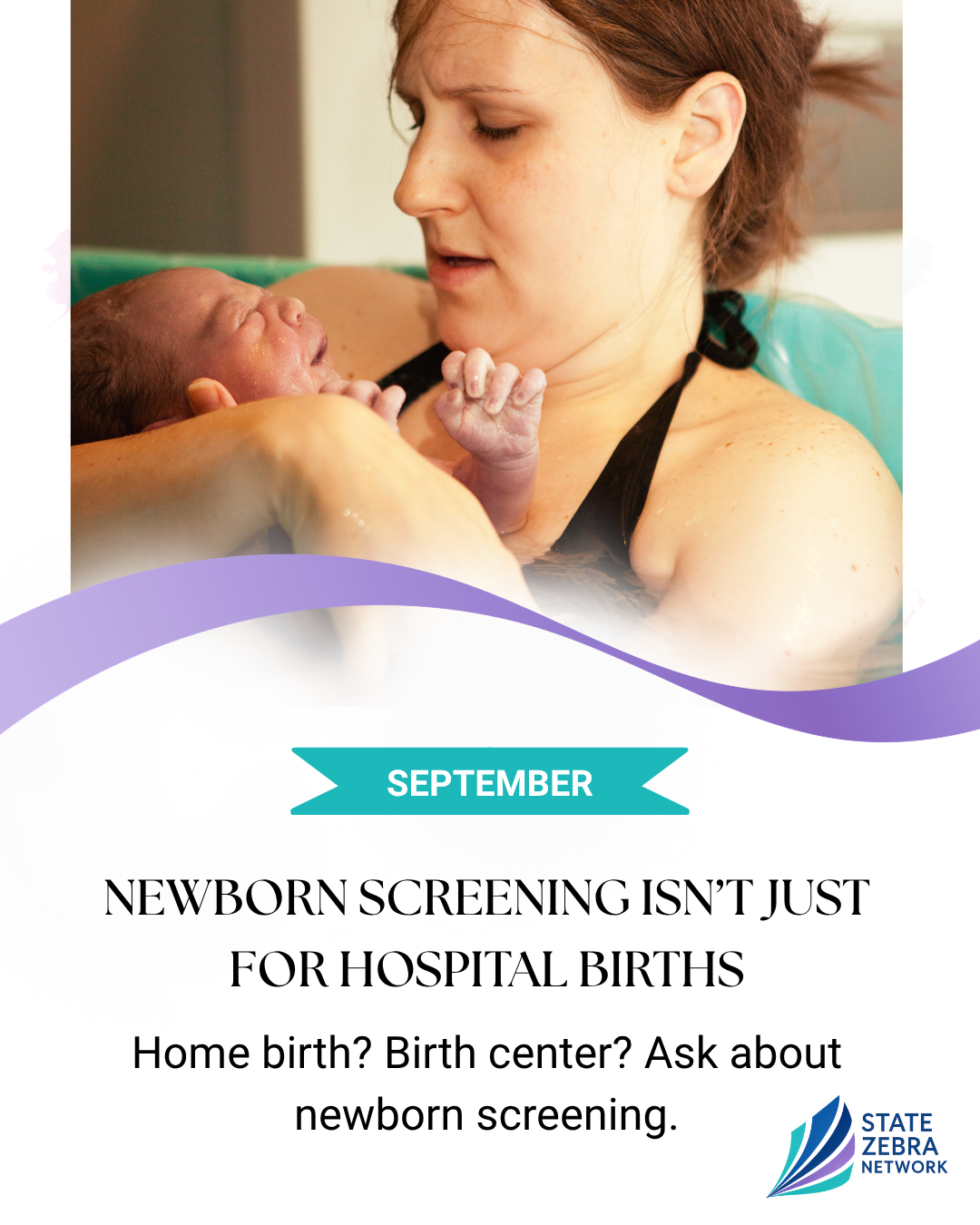
Newborn Screening Is Not Just for Hospital Births
FACEBOOK / INSTAGRAM
Planning a home birth or birth center delivery? Newborn screening still matters. The process for arranging screening can differ outside a hospital setting, so families should ask their midwife, birth center, health care provider, or state newborn screening program how and when screening will happen.
X / TWITTER: Home birth or birth center? Newborn screening still matters. Ask
how and when your baby’s screening will be completed. #NewbornScreening #HomeBirth #BirthCenter
HASHTAGS: #NewbornScreening #NewbornScreeningAwarenessMonth
#RareDisease #StateZebraNetwork
MEMBER NOTE: Optional customization: Add your state program’s
contact information.
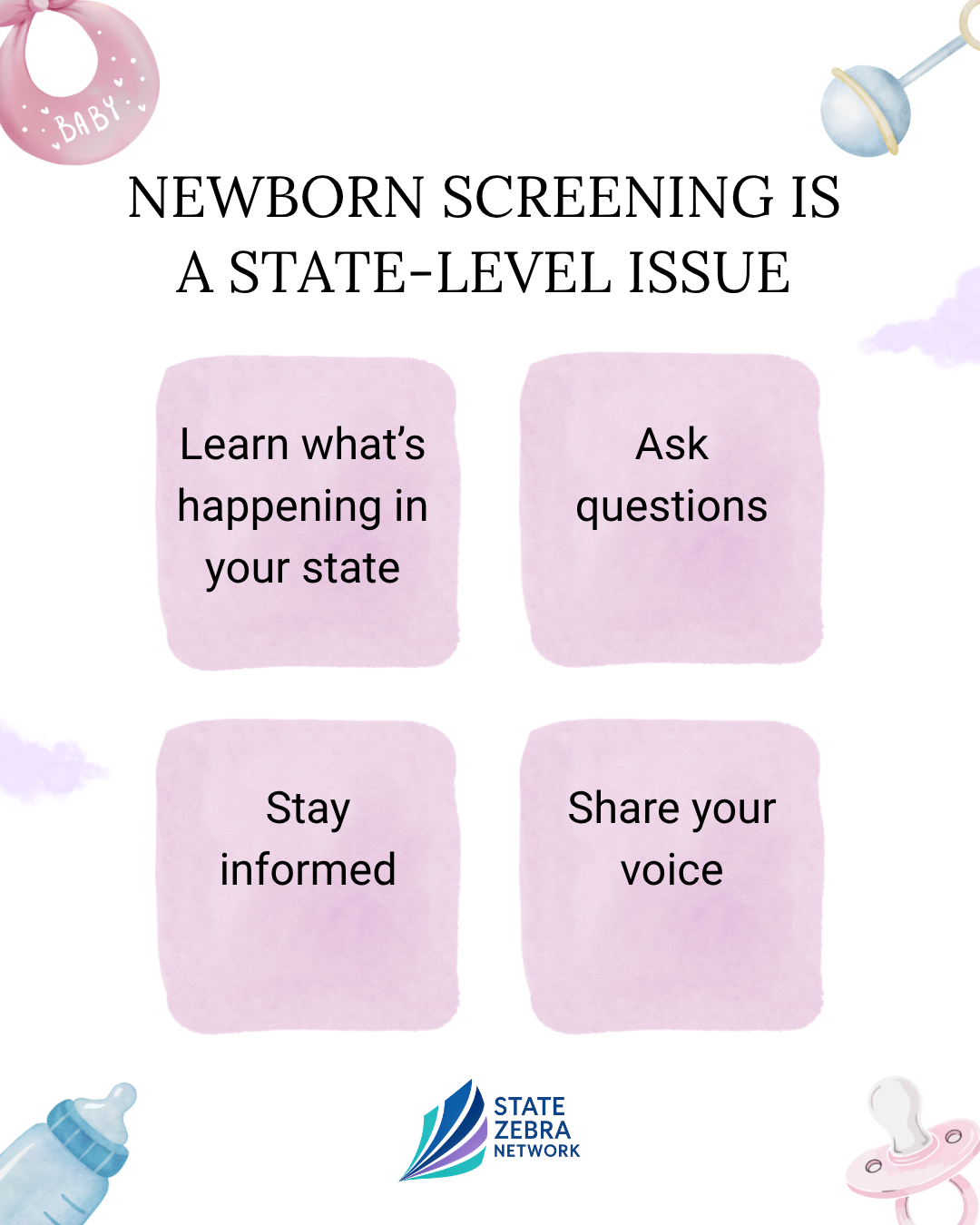
Newborn Screening Is a State-Level Issue
FACEBOOK / INSTAGRAM
Newborn Screening Awareness Month may be ending, but state-level advocacy does not stop on September 30. Learn what is happening in your state. Ask questions. Stay informed. Share your voice. The policies, processes, and people behind newborn screening shape what happens for babies and families every day of the year. Keep the conversation going.
X / TWITTER: September may be ending, but newborn screening advocacy continues
all year. Learn what is happening in your state. Ask questions. Stay informed. Share your voice. #NewbornScreening #RareDiseaseAdvocacy #StateZebraNetwork
HASHTAGS: #NewbornScreening #NewbornScreeningAwarenessMonth
#RareDisease #StateZebraNetwork #RareDiseaseAdvocacy
MEMBER NOTE: Strong customization opportunity: End with your
coalition’s contact information or next advocacy action.
Source: Newborn screening state research by Patient Advocacy Strategies and RareRising.
The ZIP-Code Lottery
FACEBOOK / INSTAGRAM
Newborn screening is one of the most successful public health programs in history, catching rare, serious, treatable conditions in the first days of life.
But there is an equity gap hiding in plain sight: the conditions a baby is screened for depend on the state where they are born. A condition on the panel in one state may be missing in the next.
With the federal review committee gone since 2025, closing that gap now depends on state leadership, state advisory boards, and advocates showing up.
Equity in rare disease starts at birth, with the same chance at early detection no matter the state.
CTA: Find your state’s screening panel and compare it to the national RUSP. If there is a gap, that is your advocacy agenda.
X / TWITTER: The ZIP-code lottery: a baby’s newborn screening panel can change
at a state line. Compare your state’s panel with the RUSP. If there is a gap, that is an advocacy opportunity. #NewbornScreening #HealthEquity #RareDisease
HASHTAGS: #NewbornScreening #NewbornScreeningAwarenessMonth
#RareDisease #StateZebraNetwork #HealthEquity #RUSP #RareDiseaseAdvocacy
MEMBER NOTE: Source: Newborn screening state research by Patient
Advocacy Strategies and RareRising.
Source: Newborn screening state research by Patient Advocacy Strategies and RareRising.
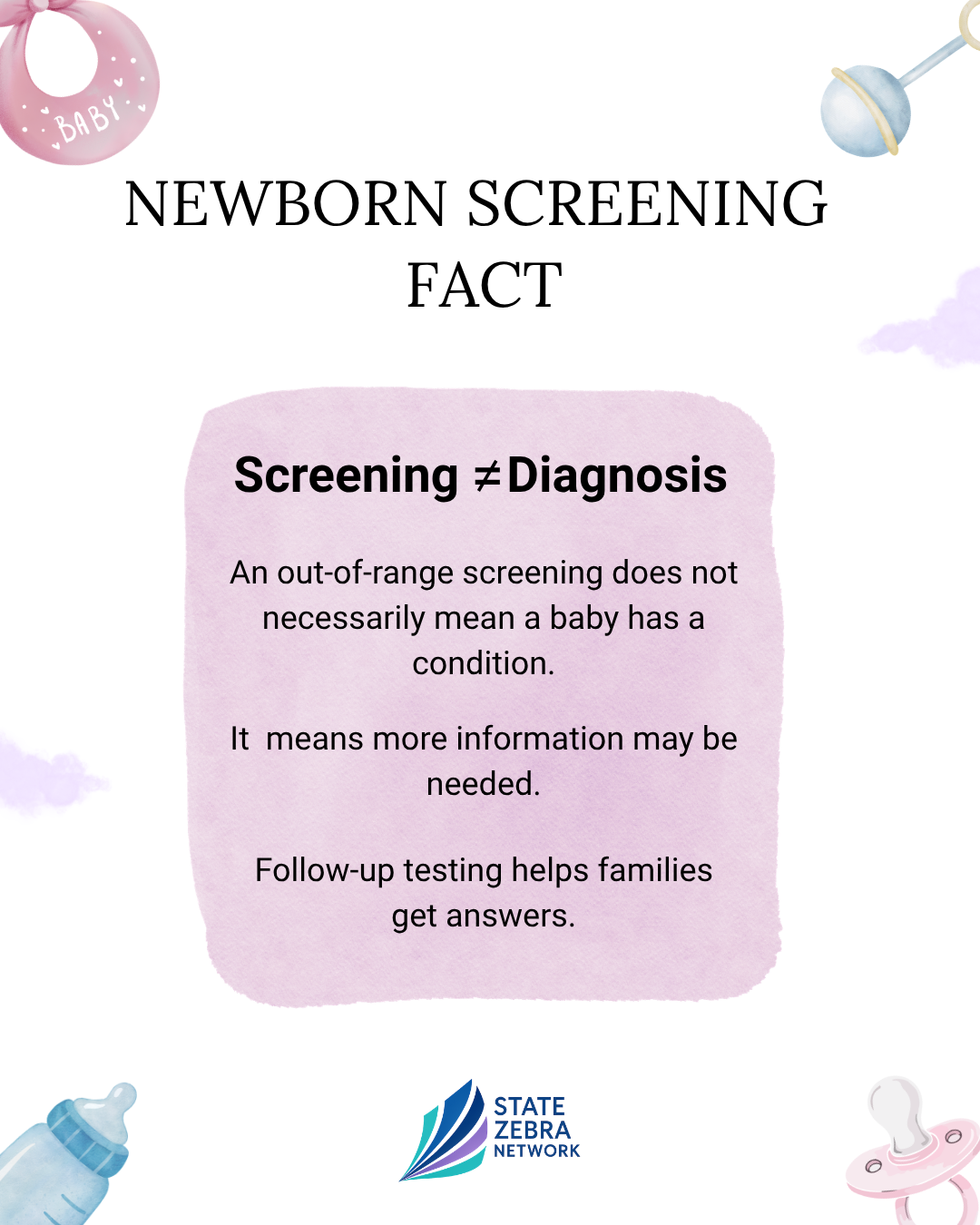
Screening Is Not a Diagnosis
FACEBOOK / INSTAGRAM
An out-of-range newborn screening result can be scary, but screening is not the same as diagnosis. An out-of-range result means more information may be needed. Follow-up testing helps determine whether a baby actually has the condition and what comes next.
X / TWITTER: Screening is not diagnosis. An out-of-range result means more
information may be needed, and follow-up testing helps families get answers. #NewbornScreening #NBSMonth
HASHTAGS: #NewbornScreening #NewbornScreeningAwarenessMonth
#RareDisease #StateZebraNetwork
MEMBER NOTE: No customization needed.
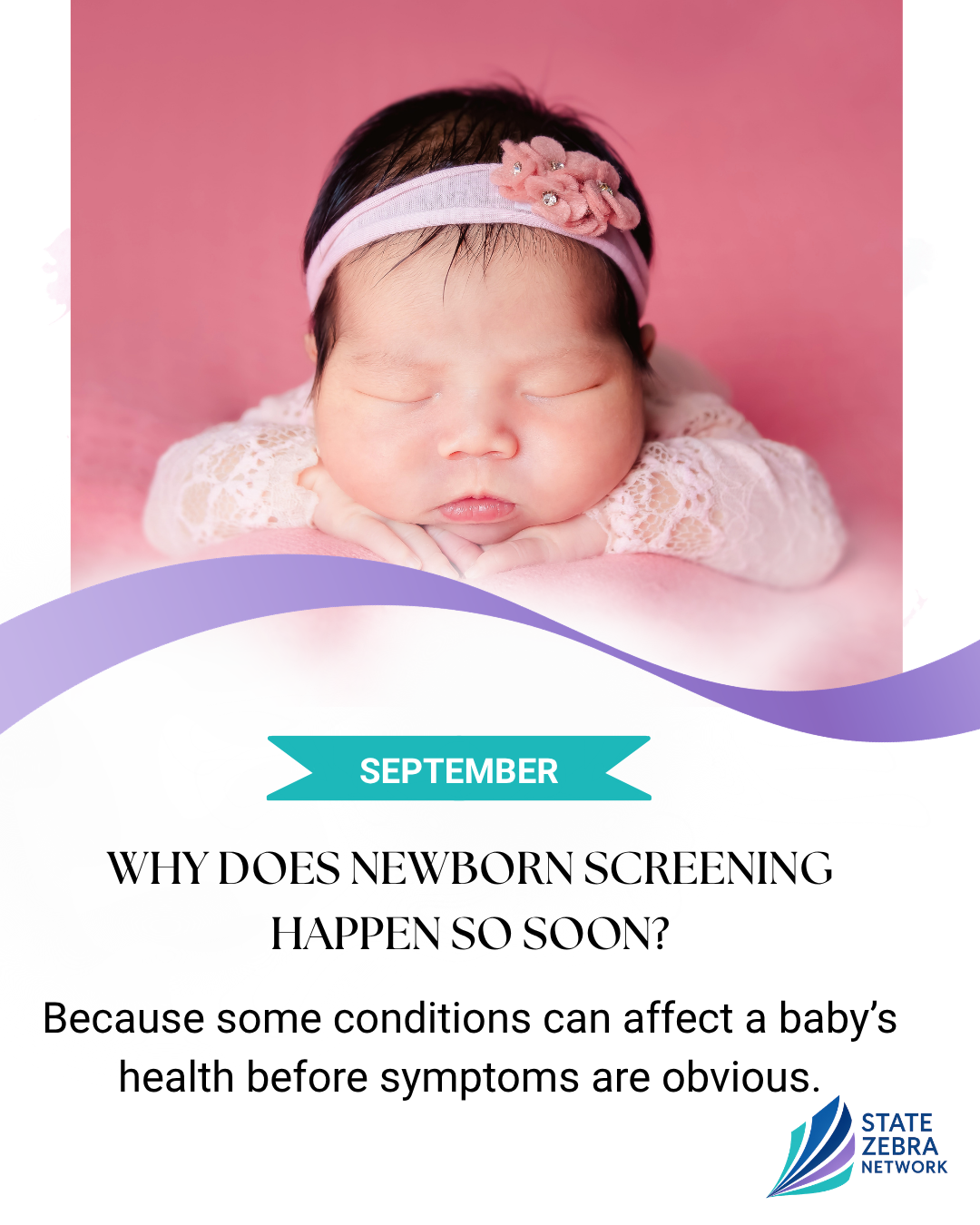
Why So Soon?
FACEBOOK / INSTAGRAM
A newborn can look completely healthy and still have a serious health condition. That is exactly why newborn screening happens before symptoms appear. Screening is designed to flag babies who may need additional testing, so families and providers can get answers as quickly as possible.
X / TWITTER: A baby can look perfectly healthy and still have a serious
condition. Newborn screening looks for concerns before symptoms appear. #NewbornScreening #EarlyDetection
HASHTAGS: #NewbornScreening #NewbornScreeningAwarenessMonth
#RareDisease #StateZebraNetwork
MEMBER NOTE: No customization needed.
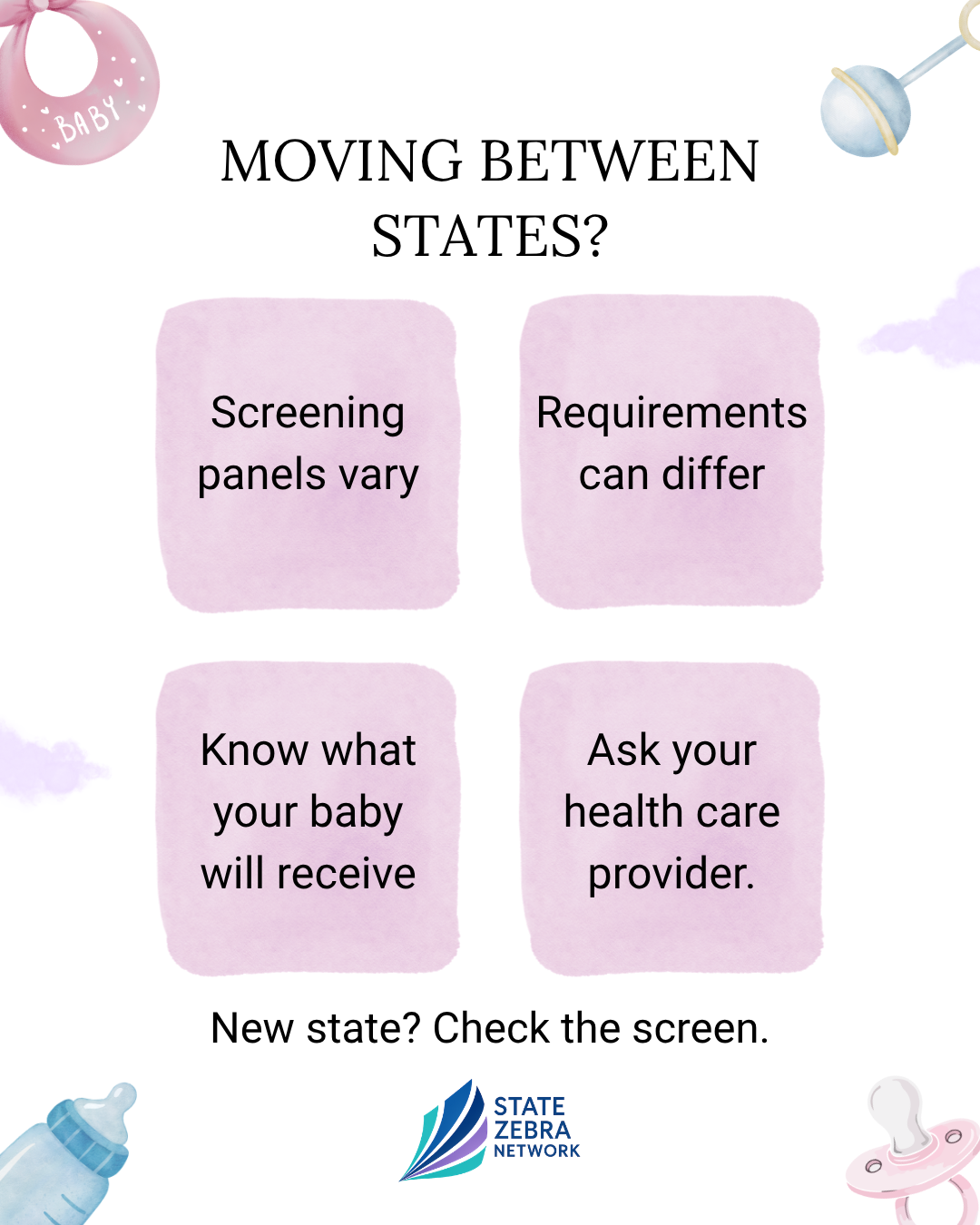
Moving Between States?
FACEBOOK / INSTAGRAM
New state? Check the screen. Newborn screening panels and requirements can differ from one state to another. If your family moves during pregnancy or soon after birth, ask your health care provider what newborn screening your baby will receive in the new state and whether anything additional is recommended.
X / TWITTER: Moving between states during pregnancy or after birth? Newborn
screening panels can vary. Ask what your baby will receive in the new state. #NewbornScreening #KnowYourState
HASHTAGS: #NewbornScreening #NewbornScreeningAwarenessMonth
#RareDisease #StateZebraNetwork
MEMBER NOTE: Optional customization: Link to your state panel.
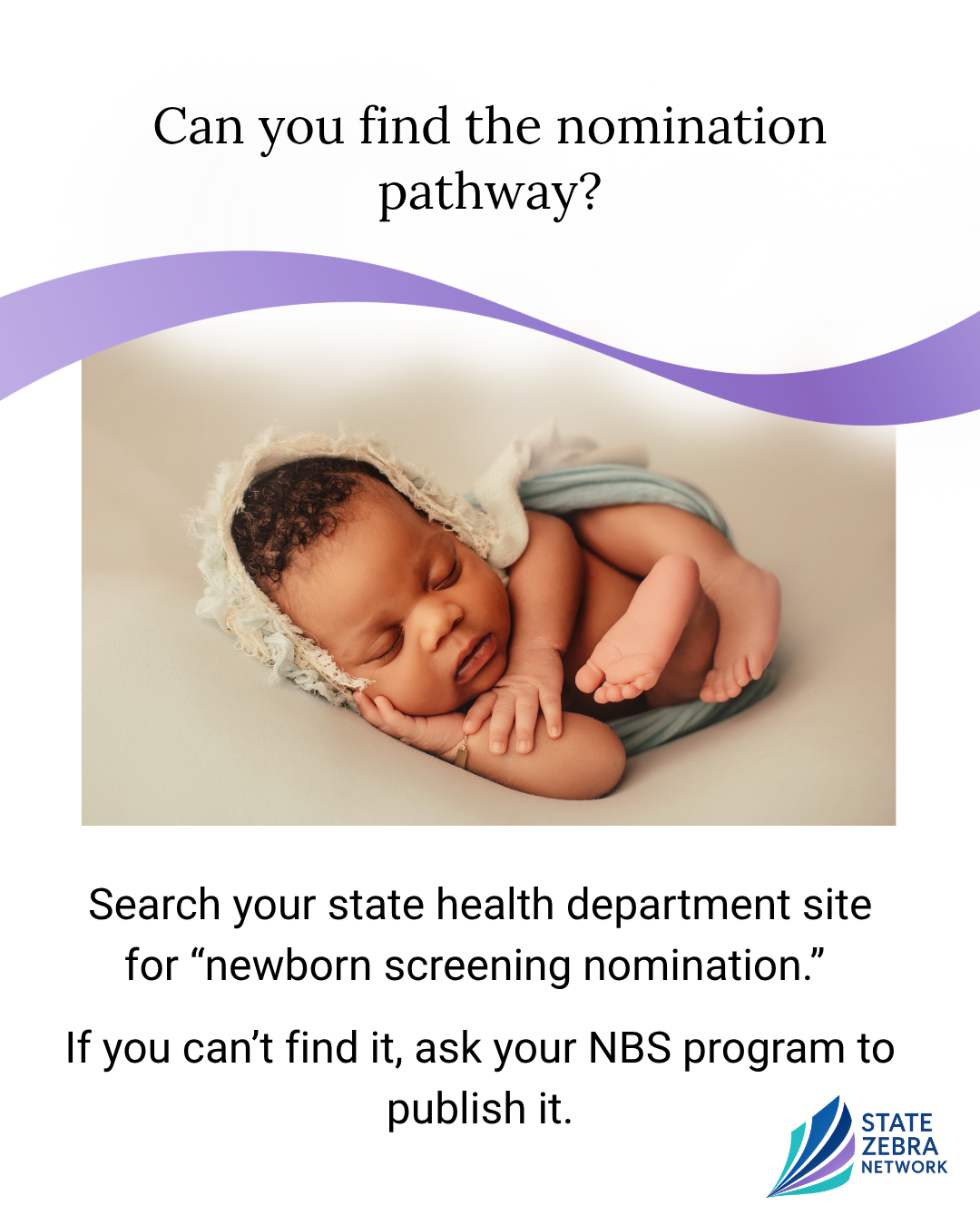
Can You Find the Nomination Pathway?
FACEBOOK / INSTAGRAM
Only about 1 in 4 states publicly explain how to nominate a condition for newborn screening.
How does a new disease get added to a state’s newborn screening panel? Someone, usually a family, clinician, or advocacy group, has to nominate it. But a 51-state review found that only about 1 in 4 states publicly post their nomination process and instructions, and only 5 states have a public tracker showing where a nominated condition stands.
For rare disease families, that opacity is personal: a condition sitting in a hidden queue could be the one affecting their child. Transparent nomination pathways are not paperwork. They are how a rare disease community moves from “we exist” to “our babies get screened.”
CTA: Search your state health department site for “newborn screening nomination.” If you cannot find it, ask your NBS program to publish it.
X / TWITTER: Can you find your state’s newborn screening nomination pathway?
Only about 1 in 4 states publicly explain the process. Search your health department site. If it is not there, ask for it. #NewbornScreening #RareDiseaseAdvocacy
HASHTAGS: #NewbornScreening #NewbornScreeningAwarenessMonth
#RareDisease #StateZebraNetwork #RareDiseaseAdvocacy #HealthPolicy
MEMBER NOTE: Source: Newborn screening state research by Patient
Advocacy Strategies and RareRising.
Source: Newborn screening state research by Patient Advocacy Strategies and RareRising.
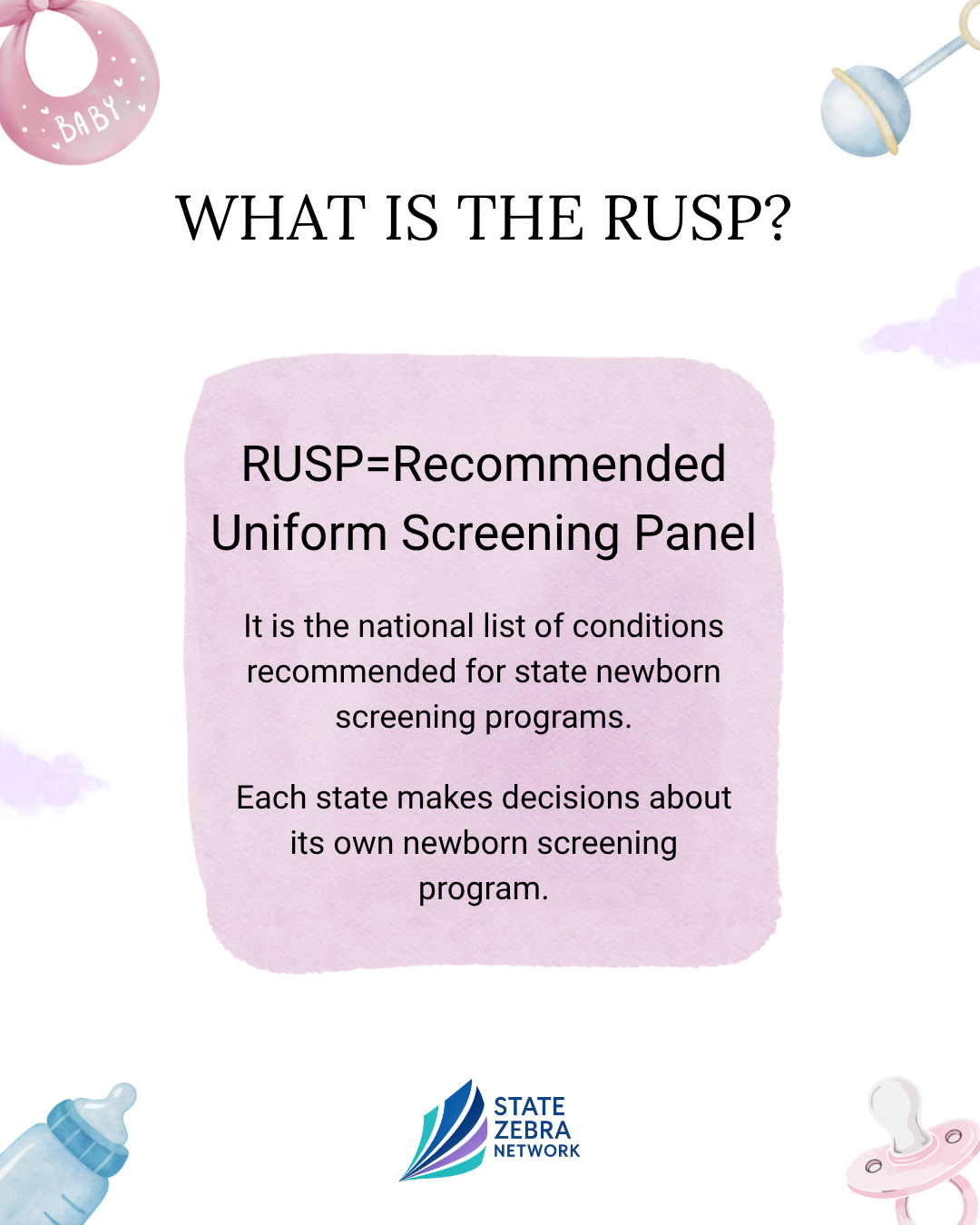
What Is the RUSP?
FACEBOOK / INSTAGRAM
RUSP stands for Recommended Uniform Screening Panel. It is the national list of conditions recommended for state newborn screening programs. States make decisions about their own programs, which means the conditions included on newborn screening panels can vary across the country. Understanding the RUSP gives families and advocates a useful benchmark for looking at their own state’s panel.
X / TWITTER: What is the RUSP? The Recommended Uniform Screening Panel is the
national list of conditions recommended for state newborn screening programs. States still make their own program decisions. #RUSP #NewbornScreening
HASHTAGS: #NewbornScreening #NewbornScreeningAwarenessMonth
#RareDisease #StateZebraNetwork
MEMBER NOTE: No customization needed.
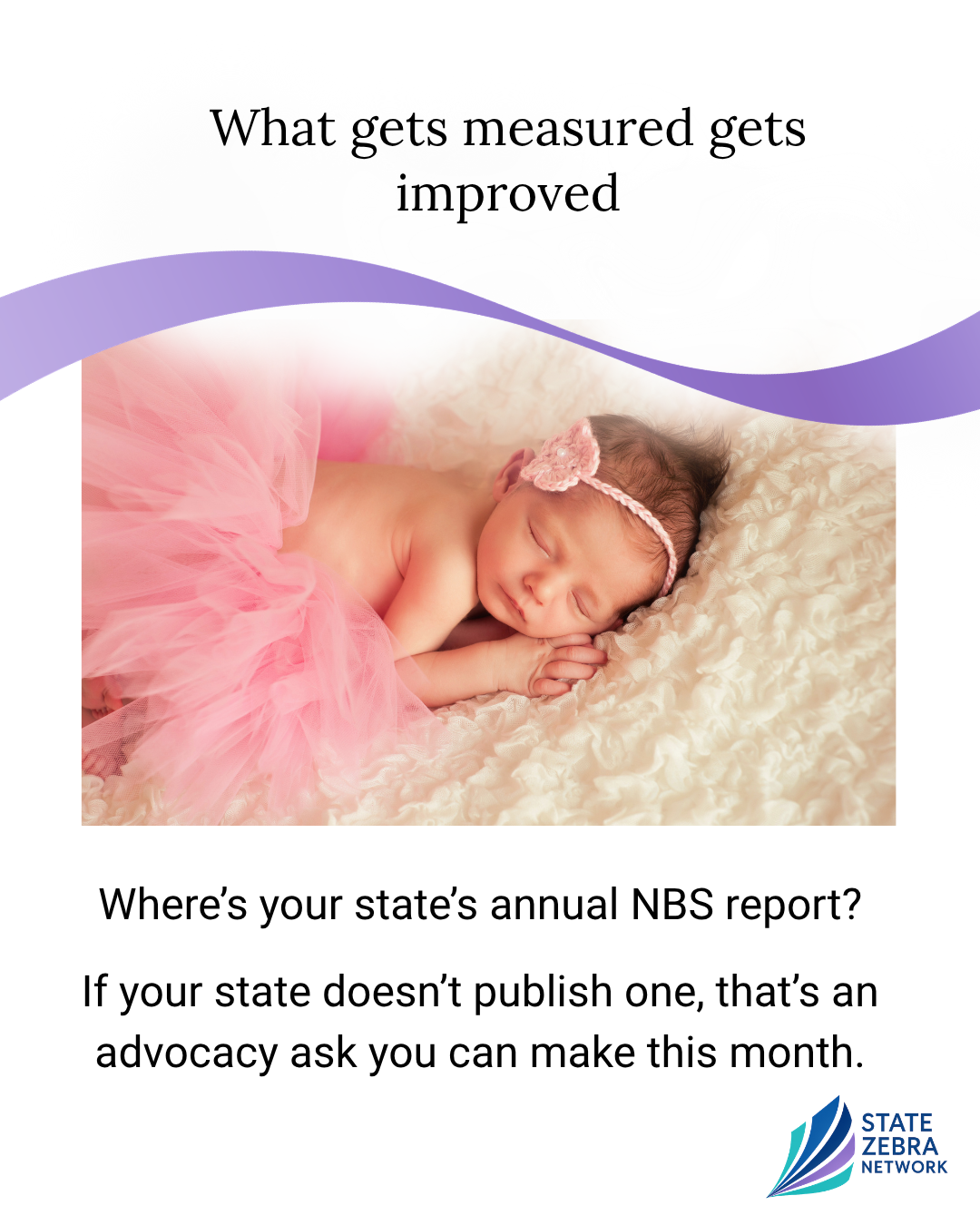
What Gets Measured Gets Improved
FACEBOOK / INSTAGRAM
How many babies were screened last year? How many were referred for follow-up? How long did that follow-up take?
Only about a third of states publish a newborn screening annual report with outcomes like these. Without public data, families and advocates cannot tell whether the program is reaching every baby or where follow-up is falling short.
Public reporting is not about pointing fingers. It is how a community spots gaps, celebrates what is working, and makes the case for adding conditions and resources.
This NBS Awareness Month, ask your state: where is your annual newborn screening report?
CTA: If your state does not publish one, that is an advocacy ask you can make this month.
X / TWITTER: What gets measured gets improved. Does your state publish an
annual newborn screening report with outcomes and follow-up data? If not, that is an advocacy ask. #NewbornScreening #HealthPolicy #RareDiseaseAdvocacy
HASHTAGS: #NewbornScreening #NewbornScreeningAwarenessMonth
#RareDisease #StateZebraNetwork #HealthPolicy #RareDiseaseAdvocacy
MEMBER NOTE: Source: Newborn screening state research by Patient
Advocacy Strategies and RareRising.
Source: Newborn screening state research by Patient Advocacy Strategies and RareRising.
The Work Does Not End With Screening
FACEBOOK / INSTAGRAM
Newborn screening is the beginning, not the finish line. When a screen identifies a possible concern, families need timely follow-up, confirmatory testing, specialists, treatment, and clear communication. A strong newborn screening system is not only about finding conditions. It is about making sure families can move from screening to answers and care.
X / TWITTER: Newborn screening is the beginning, not the finish line. Strong
programs connect families from screening to follow-up, answers, specialists, and care. #NewbornScreening #RareDisease
HASHTAGS: #NewbornScreening #NewbornScreeningAwarenessMonth
#RareDisease #StateZebraNetwork
MEMBER NOTE: Optional customization: Add a state or local
follow-up resource.